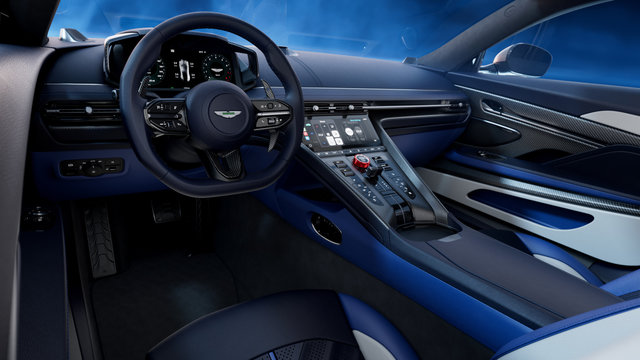
The Aston Martin DB12 S presents a decision extending beyond performance into personal expression. Three interior signatures - Monotone, Bitone, and Tritone - define how the cabin communicates aesthetic sensibility through distinct approaches to colour blocking and material composition.
The interior signature shapes daily ownership experience, from visual impact to tactile connection during spirited driving. For collectors viewing vehicles as extensions of personal identity, this choice carries weight.
The Monotone Signature: Unified Restraint
Monotone commits to a single colour throughout the cabin. Premium leather or the DB12 S's exclusive leather-and-Alcantara combination appears in one hue across seats, door panels, dashboard, and trim. This creates visual continuity, allowing material quality to take precedence over contrast.
Monotone suits owners prioritizing subtlety and cohesion. The absence of colour breaks means the eye registers a unified environment. Signature red "S" accents on seatbelts and stitching provide the only deliberate contrast, reinforcing performance character without disrupting harmony.
This signature works particularly well with darker tones - black, charcoal, deep navy - where the single-colour approach enhances the focused, driver-centric atmosphere. Lighter selections like cream or tan deliver openness while maintaining unbroken visual flow.
The Bitone Signature: Deliberate Contrast
Bitone introduces a second colour, typically on seat inserts, lower door panels, or dashboard accents. This creates intentional contrast zones defining cabin architecture. The primary colour establishes the foundation while the secondary hue highlights design details.
Bitone balances visual interest with restraint. It avoids three-colour complexity while offering more dynamic presence than Monotone. Common pairings include black with tan, charcoal with red, or navy with cream - combinations respecting British automotive aesthetics while allowing contemporary interpretation.
For DB12 S owners, Bitone often emphasizes sport-oriented elements. Black with red accents on seat bolsters reinforces the performance narrative. Alternatively, pairing a neutral base with a richer secondary tone - tan with forest green - nods to Aston Martin heritage without sacrificing modern sophistication.
The Tritone Signature: Layered Complexity
Tritone offers the most expressive option, introducing a third colour for layered visual depth. This typically assigns one colour to primary surfaces, a second to accent zones, and a third to fine details like piping, stitching, or trim inlays.
This demands careful colour selection. Three poorly coordinated hues fragment visual coherence. When executed correctly, Tritone achieves bespoke craftsmanship signaling the owner's engagement with customization. It's the choice of collectors viewing their DB12 S as a curated object.
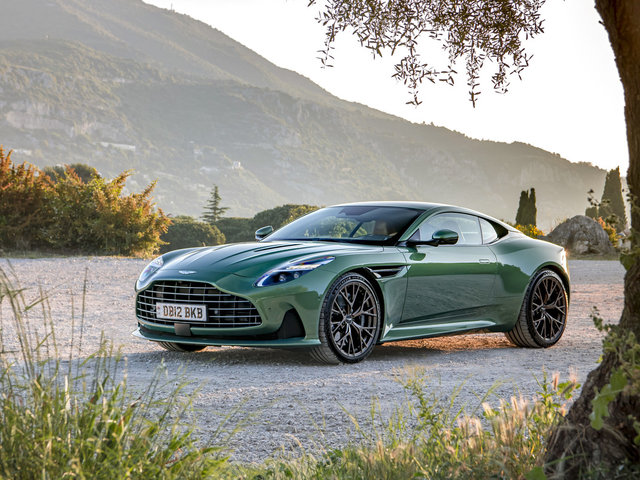
Tritone interiors often incorporate heritage colours - British Racing Green, Stirling Green, or motorsport-specific shades. The third colour might appear only in contrast stitching or piping, providing subtle complexity rewarding close inspection. This suits owners appreciating the interplay between restraint and detail.
Material Combinations: Leather and Alcantara
Beyond colour, the DB12 S offers material pairing influencing aesthetics and tactile experience. Premium semi-aniline leather provides traditional luxury, while Alcantara - synthetic suede with motorsport heritage - delivers grip and technical appearance.
The exclusive leather-and-Alcantara combination typically places Alcantara on high-contact surfaces: steering wheel rim, seat bolsters, sometimes door inserts. This serves functional and aesthetic purposes. Alcantara's texture provides better grip during spirited driving, while its matte finish contrasts with leather's natural sheen.
Owners can specify whether Alcantara appears in primary or secondary colour. In Tritone configurations, Alcantara often becomes the third material element, adding textural variety to colour layering.
Signature Red "S" Accents: Performance Identity
Every DB12 S interior includes signature red accents on seatbelts and contrast stitching, regardless of chosen signature. These visual markers distinguish the cabin from standard DB12 interiors, appearing on seatbelt webbing, stitching, and the anodized drive mode rotary control.
This standardized accent creates continuity across all DB12 S models while allowing signatures to express individual character. In Monotone black interiors, red provides the primary visual break. In Bitone and Tritone configurations, it reinforces performance positioning.
The red accents connect to Aston Martin's motorsport heritage, providing a direct visual link to racing history without requiring overt graphics or badging.
Technology Integration: Digital Displays and Ambient Lighting
The DB12 S's fully digital instrument cluster and high-resolution infotainment screen integrate smoothly with all three signatures. Black bezels and configurable interfaces adapt to the chosen colour scheme, ensuring technology complements rather than conflicts with aesthetic direction.
Customizable ambient lighting allows further personalization. Owners can select lighting colours that match or contrast with their interior signature. In Monotone interiors, ambient lighting can introduce the only colour variation. In Tritone configurations, it can reinforce one of three selected hues.
Heated and ventilated seats function regardless of material selection, though Alcantara's breathability provides natural temperature regulation complementing the ventilation system.
The Customization Process: Q by Aston Martin
Selecting an interior signature offers the starting point for DB12 S customization. Aston Martin's Q division offers virtually unlimited personalization options, from bespoke colour matching to unique material combinations and embroidered personal crests.
Owners working with Q can specify exact colour formulations, request material samples, and preview selections through digital renderings before final specification. This ensures the interior signature aligns precisely with vision, whether matching a specific paint sample, incorporating family colours, or creating entirely new combinations.
Q allows detail-level customization within each signature. Tritone interiors can specify which surfaces receive which colours. Bitone configurations can adjust the proportion of primary to secondary colour. Even Monotone selections can incorporate subtle tonal variations creating depth while maintaining the single-colour principle.
The Verdict: Signature as Personal Statement
The choice between Monotone, Bitone, and Tritone reflects how the owner wants the DB12 S cabin to communicate. Monotone delivers focused restraint and material purity. Bitone balances visual interest with traditional elegance. Tritone offers layered complexity for collectors viewing their vehicle as a curated object.
The correct signature depends on aesthetic preferences, intended use, and what the interior should express about the owner's relationship with automotive design.
What remains constant is the DB12 S's commitment to craftsmanship. Premium materials, precise stitching, and attention to detail define every interior regardless of colour selection. The signature determines the visual approach, but underlying quality ensures that approach is told through surfaces worthy of the Aston Martin name.
Visit Aston Martin Montréal in Montréal to explore material samples and discuss how each interior signature aligns with your vision for DB12 S ownership.