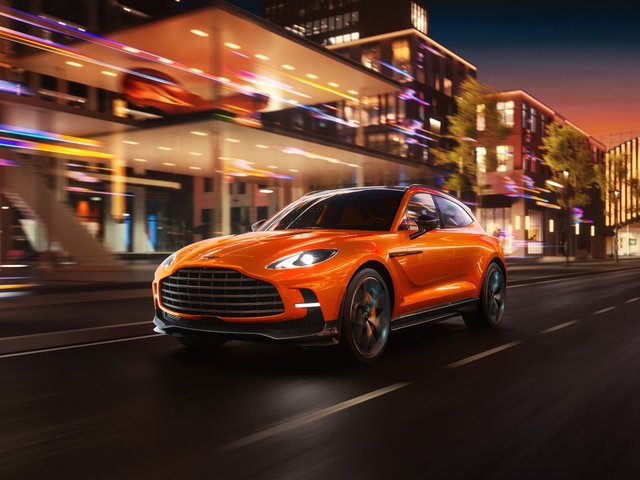
There is a category of car that does not really exist anywhere else: the British grand tourer. It is fast, but not in the way a track car is fast. It is luxurious, but not in the way a chauffeured sedan is luxurious. It is built to be driven, hard and far, by the person who owns it.
The Aston Martin Vanquish is the current flagship expression of that idea. For shoppers in Quebec who are weighing the Vanquish against other high-end performance cars, understanding the grand touring philosophy is the difference between picking the right car and the wrong one. This article walks through what GT really means at Aston Martin, and why the Vanquish is engineered around the journey itself.
What "Grand Touring" Actually Means
Grand touring — GT — is a design philosophy, not a marketing label. The original idea, going back decades, was simple: build a car that could cover real distance at real pace, in genuine comfort, with two occupants and their luggage on board.
A pure sports car prioritizes lap times and direct response, often at the expense of comfort. A luxury sedan prioritizes isolation and rear-seat space, often at the expense of driver involvement. A GT car sits between them by intent, not by accident. It is meant to be the car you take when the destination is six or seven hours away and you want to enjoy every kilometre of it.
For a Quebec buyer, that translates into a very specific use case. Think Montréal to Charlevoix, Charlevoix to the Maritimes, or a multi-day loop through New England. A GT is the car you actually want for those trips, in a way that a track-focused supercar is not.
The Vanquish as Aston Martin's Flagship GT
The Vanquish nameplate has anchored Aston Martin's flagship position across multiple generations, and the current car is the most powerful series-production model the company has ever built. Aston Martin recently marked 25 years of the Vanquish lineage, tracing three generations of front-engine, V12-powered flagships.
The current Vanquish carries that lineage forward with a hand-assembled twin-turbocharged V12 mounted up front, rear-wheel drive, and a 2+2 layout that makes it usable for occasional rear passengers or — more often — as additional, well-trimmed luggage space.
Two body styles are offered:
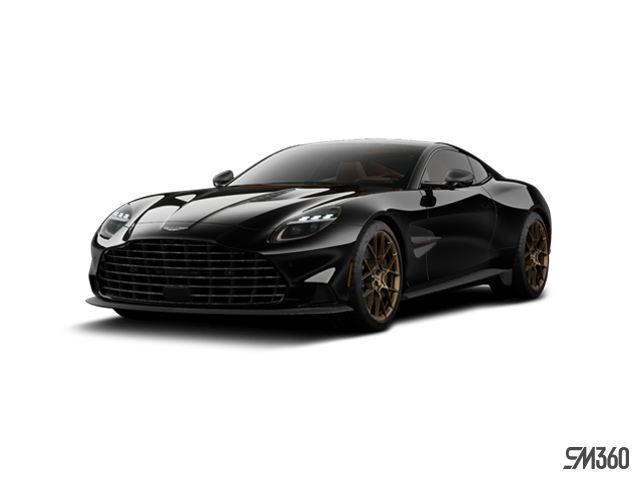
- Vanquish Coupé — the closed flagship, with the most rigid structure and the purest GT silhouette
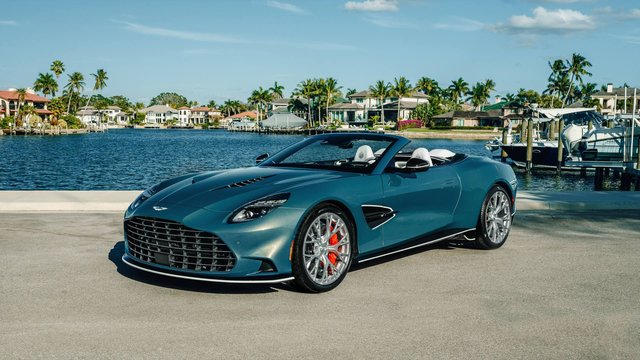
- Vanquish Volante — the open version, designed so the convertible top does not compromise the cabin's long-distance comfort
Long-Distance Comfort, Engineered In
The Vanquish's GT credentials show up most clearly in how it handles a full day behind the wheel. Several engineering choices specifically support long-distance driving:
- Front-mid engine layout. Pushing the V12 back behind the front axle line improves weight distribution, which in turn allows for softer base damping without sacrificing handling. The result is a car that absorbs highway expansion joints rather than transmitting them.
- Adaptive damping. GT, Sport, and Sport+ modes change suspension stiffness, throttle response, and exhaust character. On a long autoroute stretch, GT mode delivers a noticeably softer ride; on a back-road through the Eastern Townships, Sport+ sharpens the car's responses.
- Generous fuel tank and cruising range. Grand touring assumes long stints between fuel stops. The Vanquish is sized for that reality, not for short urban commutes.
- Cabin sound management. A flagship GT must be quiet at speed without becoming sterile. The Vanquish balances exhaust character with insulated cabin acoustics, so a conversation at 120 km/h is genuinely comfortable.
- Seating and ergonomics. The driver's seat, steering wheel range, and pedal placement are calibrated for sustained driving, not just short bursts.
These are not bullet points pulled from a brochure. They are the specific engineering decisions that separate a GT from a sports car wearing GT badges.
The Hand-Crafted Interior
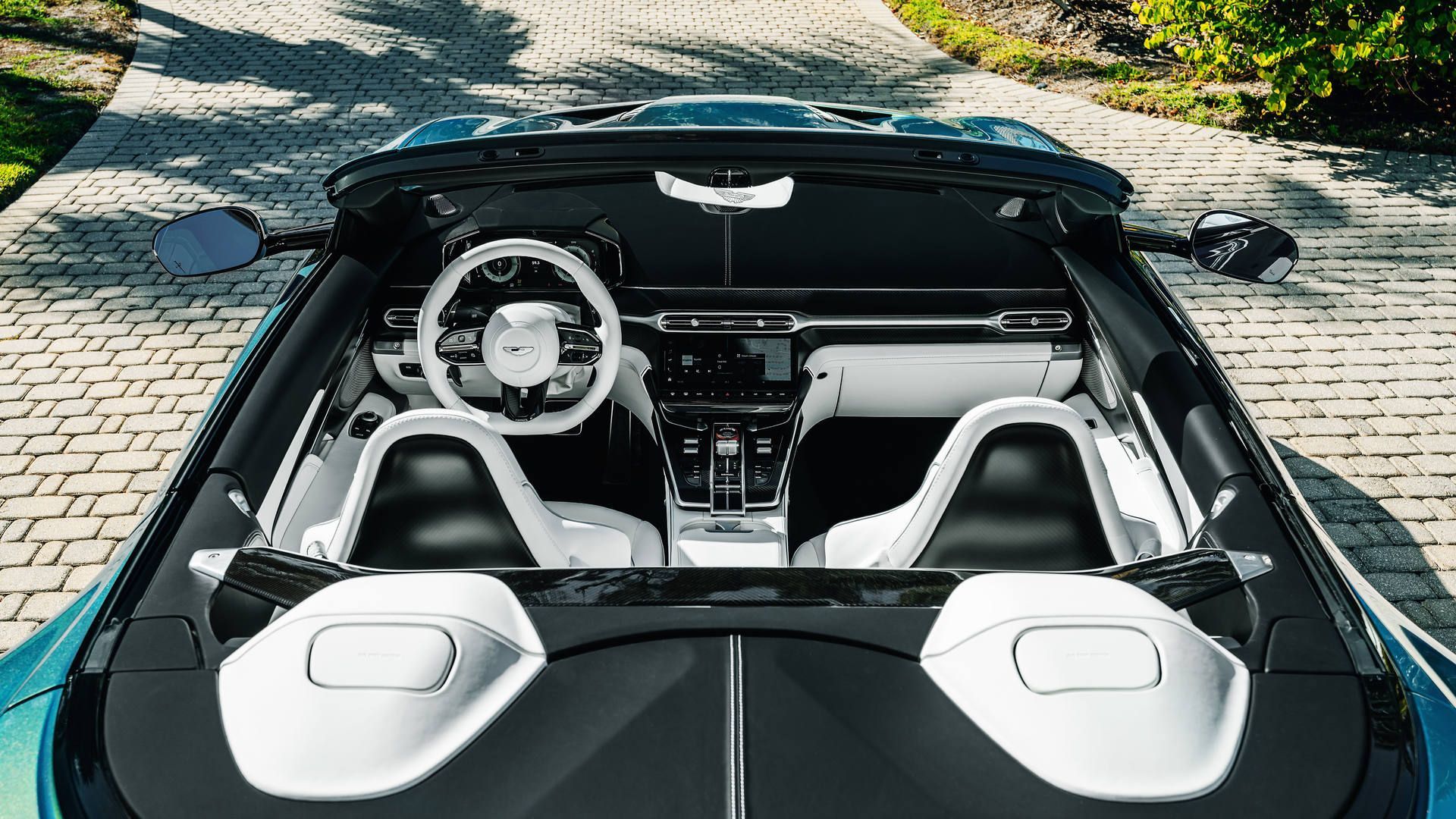
Where the Vanquish pulls ahead of nearly every competitor is the cabin. Aston Martin builds these interiors largely by hand at the Gaydon factory in England. That shows up in details a buyer can verify in person:
- Hand-stitched leather across the dash, doors, seats, and console
- Real metal switchgear with weighted, mechanical action
- Knurled drive-mode controls and physical climate dials, kept on purpose rather than buried in a touchscreen
- Material choices — leathers, wood veneers, alcantara, machined aluminum — that can be specified to a level most luxury competitors do not match
- Optional Q by Aston Martin personalization, which opens the cabin to fully bespoke specification, from one-off paint to embroidered headrests and custom sill plaques
For a buyer who is choosing between a Vanquish and a more clinical, technology-led competitor, the interior is often the moment the decision tilts. It is the part of the car you live with most directly.
How the Vanquish Compares Within the Aston Martin Range
For shoppers cross-shopping inside the Aston Martin lineup itself, the Vanquish sits at the top:
- Vantage / Vantage S — sharper, more sports-car focused, smaller. The driver's car of the lineup.
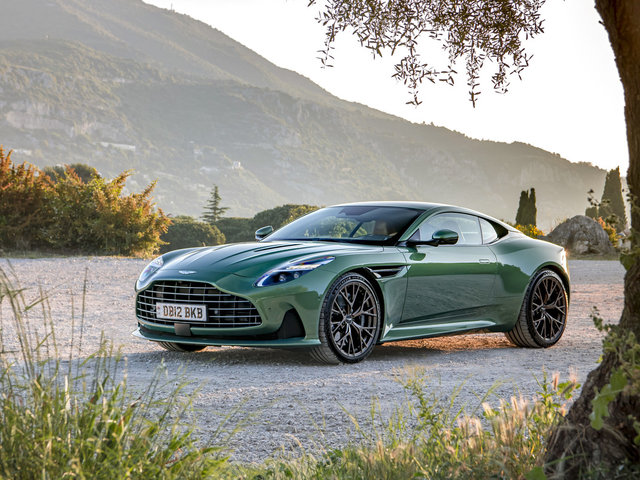
- DB12 / DB12 S / DB12 Volante — the mid-tier GT. Excellent grand tourer, V8 engine, slightly smaller and lighter than the Vanquish.
- Vanquish / Vanquish Volante — the flagship. V12, more power, more presence, more bespoke potential.
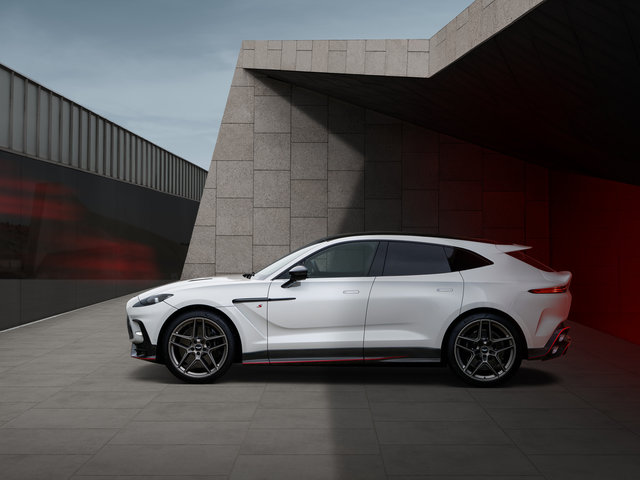
- DBX707 / DBX S — the high-performance SUV, for owners who need year-round practicality alongside Aston Martin character.
The decision between DB12 and Vanquish often comes down to two questions: how much does the V12 character matter to you, and how often will you actually use the car for long-distance driving? If both answers point upward, the Vanquish is the right choice.
What This Means for a Quebec Buyer
Buying a flagship GT in Quebec is a specific calculation. The car has to handle Montréal city driving, four-season Quebec weather conditions, and the long Canadian distances that GT cars were originally designed for. The Vanquish is built for exactly that profile — a car you can drive to dinner downtown, then point east the next morning and not stop until the Atlantic.
It is also worth saying clearly: this is a car that rewards being driven. Garage queens are not the customer. Owners who use their flagship as the GT it was designed to be are.
Considering a Vanquish? Schedule a private consultation at Aston Martin Montréal in Montréal, Quebec to review the current Vanquish data sheet, walk through Q by Aston Martin specification options, and discuss how the car fits your driving profile.